
Library
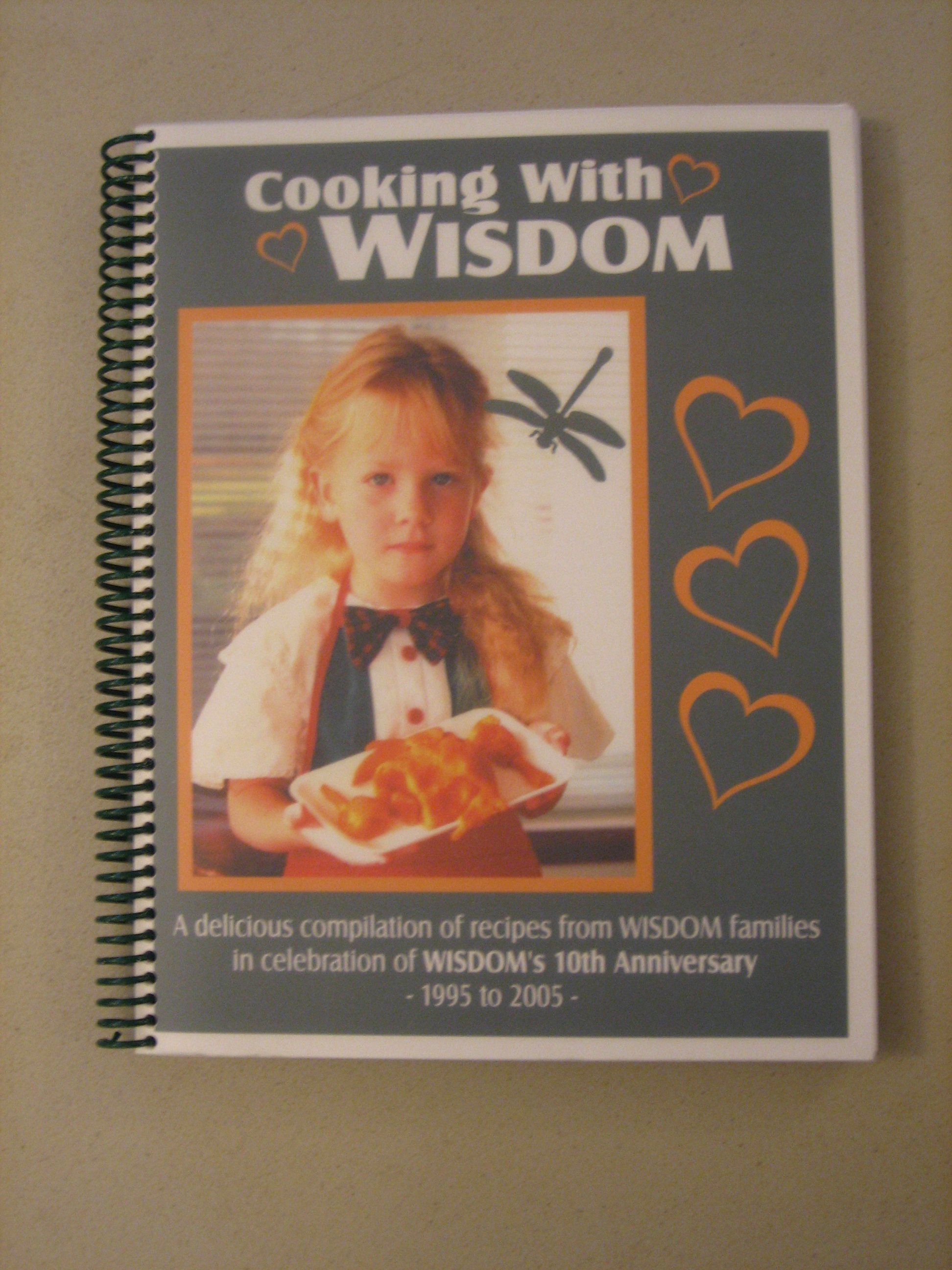
When WISDOM celebrated its 10th anniversary, families were invited to send in some of the recipes that had become favourites around their own kitchen tables. WISDOM mom Jocelyn LaRocque gathered those contributions together, and Cooking With WISDOM I was born. It was filled with the kind of recipes community cookbooks do best: tried-and-true family favourites—the meals, baking and treats that had actually been made, shared, adjusted, loved, and made again in WISDOM homes.
And it became a favourite in its own right. “It is still my favourite cookbook,” says Terry Yaceyko, “and is full of recipes that I love.”
Today, we’re sharing a few of those recipes from the original Cooking With WISDOM I. Perhaps some of our long-time families will recognize them! ❤️
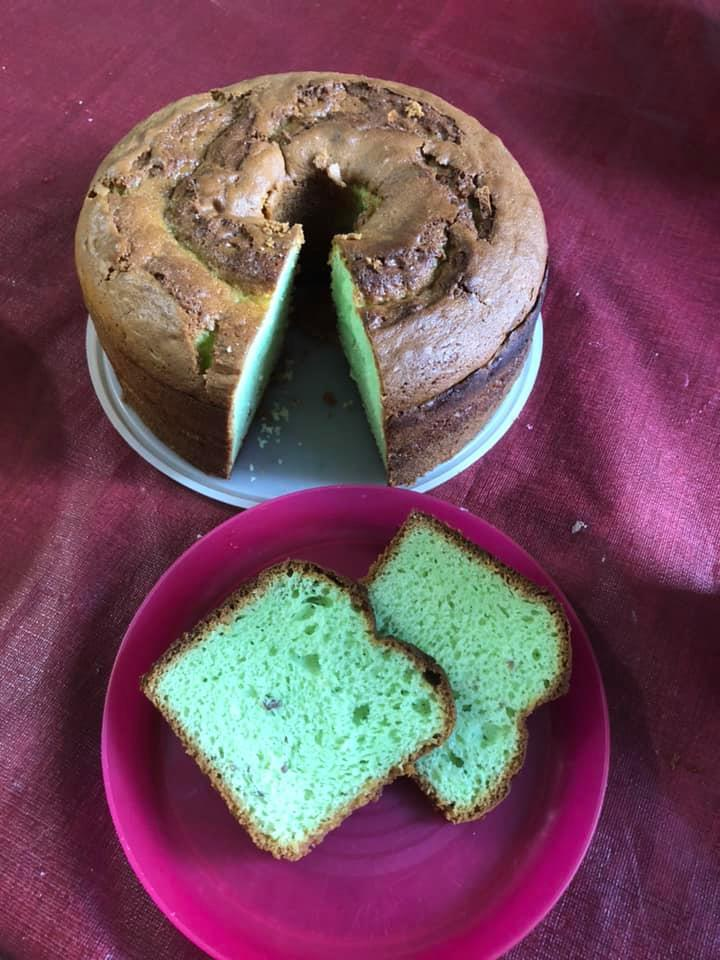
Pistachio Cake - moist, easy and freezes well (Submitted by Penny Granger)
- Combine 1/2 milk, 1/2 cup oil and 1/2 cup water
- Add 5 eggs and mix well
- Add 1 pkg white cake mix and 2 Instant Pistachio Pudding pkg.
- Mix well.
- Pour into a greased bundt / angel food cake pan
- Bake at 350 F for 55 minutes
- Yield 12 to 15 servings
Poppyseed Bundt Cake - Penny Granger
*I like to have a few of these in the freezer to take to potlucks or to friends for coffee.
- Soak 2 Tbsp. poppy seeds in 1/2 cup milk and set aside
- Combine 1 pkg Lemon Cake Mix, 1 pkg Instant Lemon Pudding mix, 1 cup water, 1/2 cup oil, and 3 eggs
- Beat on medium for 2 minutes
- Drain the poppy seeds and discard milk
- Add poppyseeds to the cake mixture and mix well.
- Bake at 350 degrees for 48-52 minutes (until toothpick comes out clean)
- Cool 10 minutes before removing from pan
- Dust with icing sugar
- Yield - 12 to 15 servings
Patty's 20 Minute Chicken Cordon Bleu - Patty Marler
*This is one of our favorite meals and it is so easy to prepare!
- Cut 4 chicken breasts into cubes
- Mix together - 1/2 cup flour w. dill weed, poultry seasoning, sage - and coat cubed chicken
- Fry with oil and garlic until chicken is cooked (about 10 - 15 minutes)
- Turn down heat and place (2 cm squares) sliced swiss cheese and black forest ham over cooked chicken.
- Wait about 5 minutes until the cheese melts.
- Serves 6 with no leftovers
Granola Snack Bars - Brenda Wohlgemuth
*We have 5 children from 2-19 years of age whom we have been homeschooling for 8 years on our farm in Alberta. Home Schooling has allowed us the freedom to teach our children many interesting things, and to spend their precious childhood years with them. This fall, our 9 year old daughter watched quietly, as Dad called a moose within yards of them.
*These bars are handy to send in lunches or take on a hunting trip with Dad. *Our family has wheat and dairy allergies so I use lactose free margarine and rice flour.
- Melt 1/2 marg and 8 cups of mini marshmallows
- Add: 2 cups rolled oats, 1 cup crushed graham wafers (or 1 1/2 cups rice flour), 1 cup flax seed, 2 cups raisins (or mixed dry fruit), 1 cup of seeds (pumpkin, almond, sunflower, etc.) and 1/2 cup coconut
- Press into a pan.
- When cool, cut into squares.
Colored Popcorn (Rachel Yaceyko) 
*Very similar to the purchased candy popcorn
- Combine 2 cups sugar, 1/2 cup water, 1 T. margarine, 1 tsp. red food coloring, and 1/4 tsp. salt
- Boil together for 3 minutes.
- Pop 2 cups of popcorn kernels
- Pour liquid mixture over popcorn
- Stir until evenly coated
- Cool and cookie sheet
----
Five years after that first cookbook, WISDOM marked its 15th anniversary with Cooking With WISDOM II—an even larger collection celebrating both the experience of long-time WISDOM families and the new families joining the community.
With hundreds of favourite recipes, helpful tips, quotes and little tidbits of wisdom from WISDOM families, the second volume is the sort of cookbook meant to be used rather than simply admired. Inside you’ll find everything from baking, breakfasts and appetizers to main dishes, grilling and desserts, along with Kids Can Cook, canning and preserving, and even home remedies.
With its coil binding, thorough index and easy-to-read format, it’s perfectly at home propped open on a busy kitchen counter.
📖 Cooking With WISDOM II is still available through the WISDOM Web Shop for $15.
Paper read at a Vacation Course in Education
Oxford, 1947
by DOROTHY L. SAYERS
That I, whose experience of teaching is extremely limited, and whose life of recent years has been almost wholly out of touch with educational circles, should presume to discuss education is a matter, surely, that calls for no apology. It is a kind of behaviour to which the present climate of opinion is wholly favourable. Bishops air their opinions about economics; biologists, about metaphysics; celibates, about matrimony; inorganic chemists about theology; the most irrelevant people are appointed to highly-technical ministries; and plain, blunt men write to the papers to say that Epstein and Picasso do not know how to draw. Up to a certain point, and provided that the criticisms are made with a reasonable modesty, these activities are commendable. Too much specialisation is not a good thing. There is also one excellent reason why the veriest amateur may feel entitled to have an opinion about education. For if we are not all professional teachers, we have all, at some time or other, been taught. Even if we learnt nothing—perhaps in particular if we learnt nothing—our contribution to the discussion may have a potential value.

How do I choose curriculum? Curriculum resources are useful and makeour job much easier, but remember they are a means to an end, not an end in themselves.
Don’t rush out and buy books. Before you buy any resources take a look at what stage of learning your child is in. Human beings are designed to learn in different ways at different stages in their lives. As a home schooling parent, this is the most important thing you need to consider for, if you try to teach your child according to the needs of one stage while he is in another, your success will be limited. Both you and your child will be frustrated.
Your child’s learning happens in three stages:
Sometimes this question comes hard because we lack a context.
Are we talking about our student compared to other students his age? Are we addressing his particular talents and questioning whether he has buried them or multiplied them? Are we asking the question relative to some other standard - if so, what?
Let’s consider measuring success by comparison with other students his age. Before I go any further, please let me assert that in a tutorial context (home schooling) this is the least valuable approach to student evaluation. However, this is the type of evaluation we grew up with, it is the criterion our child (even if he didn’t ever attend school) is very familiar with, and it is possible that it is the primary means by which he views his progress. Realistically, for much of our population, this is the only means by which success, personal value, even life choices are measured, valid or not. A form of relativism, the flaw is evident.
When I completed high school I received an armful of awards that meant nothing. I’m not being humble here; it’s a fact. I received the award for the highest overall average in my graduating class. I also received the Science award and the Math award. This all sounds impressive until you compare my marks with the graduating class three years prior. That particular class was loaded with high academic achievers, many of whom rightfully scored very well in their final grades. Had I been among that class, I would have received not a single award. What’s more, I wouldn’t have seemed very good at the non-academic activities either, for the class three years ahead of me also shone in sports, debate, and public speaking.
Scripture tells us it is unwise to compare ourselves with each other (2Cor 10:12), and wisdom of the ages agrees (the grass is always greener on the other side of the fence); yet we persist. The same circumstances that saw me win all kinds of honour in grade 12 also define achievement - and its lack - in the lives of many people. Students who compare themselves to others will be discontented and frustrated or they will become puffed up, possibly complacent. In any event, their self-concept will be flawed.... (continued by clicking on the link)
Preparing For Fall Facilitator Visit
The following are a few tips to allay anxiety, concern, and apprehension of your facilitator’s home visit with you. (Click on the links for more.)
- Conference with your spouse - and children if appropriate - concerning the goals, planning, and overall vision for each child’s year. Write it down in order to refer to it when your facilitator comes. Keep it simple and to the point.
- Review previous assessments (ie: Spring 2006) and education plans in order to reflect and evaluate ‘where we’ve been’, ‘how we’re doing’, and ‘where we’re going’. Some parents have even filled out the new assessment right on the previous form. If you are new with WISDOM or have misplaced the previous assessment, view education plan samples and the blank assessment form.
- E-mail or call your facilitator within a reasonable time frame prior to the visit for special requests, concerns, scheduling preferences, or anything that will assist the facilitator in making the most of the visit for all involved. If you do not know who your facilitator is, please contact the WISDOM Office to find out.
- Make samples of the children’s work available for your facilitator’s perusal.
- If possible, have a preliminary written draft of each child’s education plan.
- Pray for God’s guidance and for the effective use of the limited time available with your facilitator. We’re praying for you, too.
- Enjoy your facilitator visit, and the start of your new year of study!
 “It’s not fair! I’m so lonely, and I’m stuck at home instead of in school!”
“I’m just curious to see if I could make it—if I could do the work, and fit in with the school kids.”
“High school is an important time to see how I fit in with the world!”
“How can I be a witness to others if I’m home schooled? You should let me go to school where I can help others.”
“You don’t know how I feel about this. It’s really important to me, and I know it’s what I should be doing—it’s what I want!”
Sound familiar?
Looking back with a bit of perspective and clarity, I thank the Lord for His grace and mercy. My home schooling journey began as something we needed to do, something I didn’t feel qualified to do and something I didn’t really want to do. (Ken was the impetus behind it - so I could say he made me do it.)
As we began in the middle of the academic year, we literally ‘brought school home’ including the texts that TobyLauren had been using. (I believe bringing the texts home was a comfort to the superintendent, principal, and teachers who thought we were rather extreme people.) I ‘taught’ Miss TobyLauren in a rather barren manner and her only consolation was that she could teach her 4-year-old brother in a much more noble fashion.......
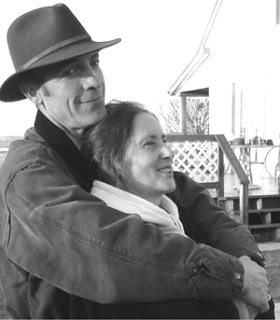 It was with the support of their local school principal that Ken and Marlane Noster brought home their eldest child, half way through grade 3. The superintendent threatened to charge them with truancy. The late 80’s were rife with inconsistencies in treatment of home schoolers.
In response to the first Alberta Home Education Regulation of 1989, Ken was invited to help a school board develop its program for administrating home schooling. He and Marlane began to pray for an answer to two burning questions: how can a board designed to administrate schools administrate home schooling? and what am I being called to do?
 Once upon a time in the not too distant past, there was a home schooling family.
Pa worked, and Ma stayed at home, teaching their five children. They had begun their home school adventure much like many other families, merely bringing school home...
 Are you beating your head against a wall? Is your thirteen year old impossible to teach? Is the curriculum that has worked so well in the past suddenly "boring?"
I recently spoke with a mother of many who, after completing an enjoyable unit study of reading and discussion on Holland, decided her fourteen year old son should follow-up this project with something concrete. She asked him to write an essay on the history of the development of the tulip industry - a topic they had all found to be interesting. As days of reluctance dragged into weeks of resistance, a normally affable mother-son relationship became outright antagonistic....