Pages
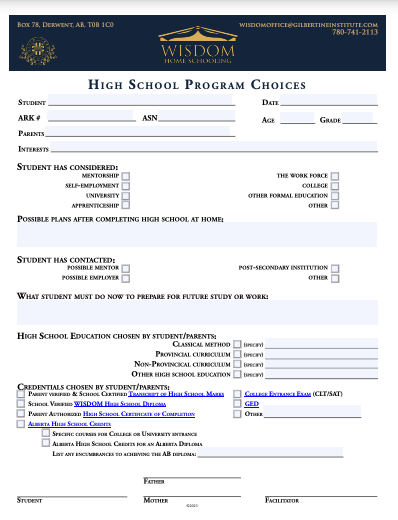
For those students in Grades 9-12, the High School Program Choices Form is filled out annually with your facilitator. This helps your student to take greater ownership of their education in these important years.
 Download
This is the legacy notification system for submitting notification via email, fax, or mail. Click here to use the highly secure, streamlined online system.
Welcome to the Notification page! Scroll to the bottom for a helpful how-to video, or read on.
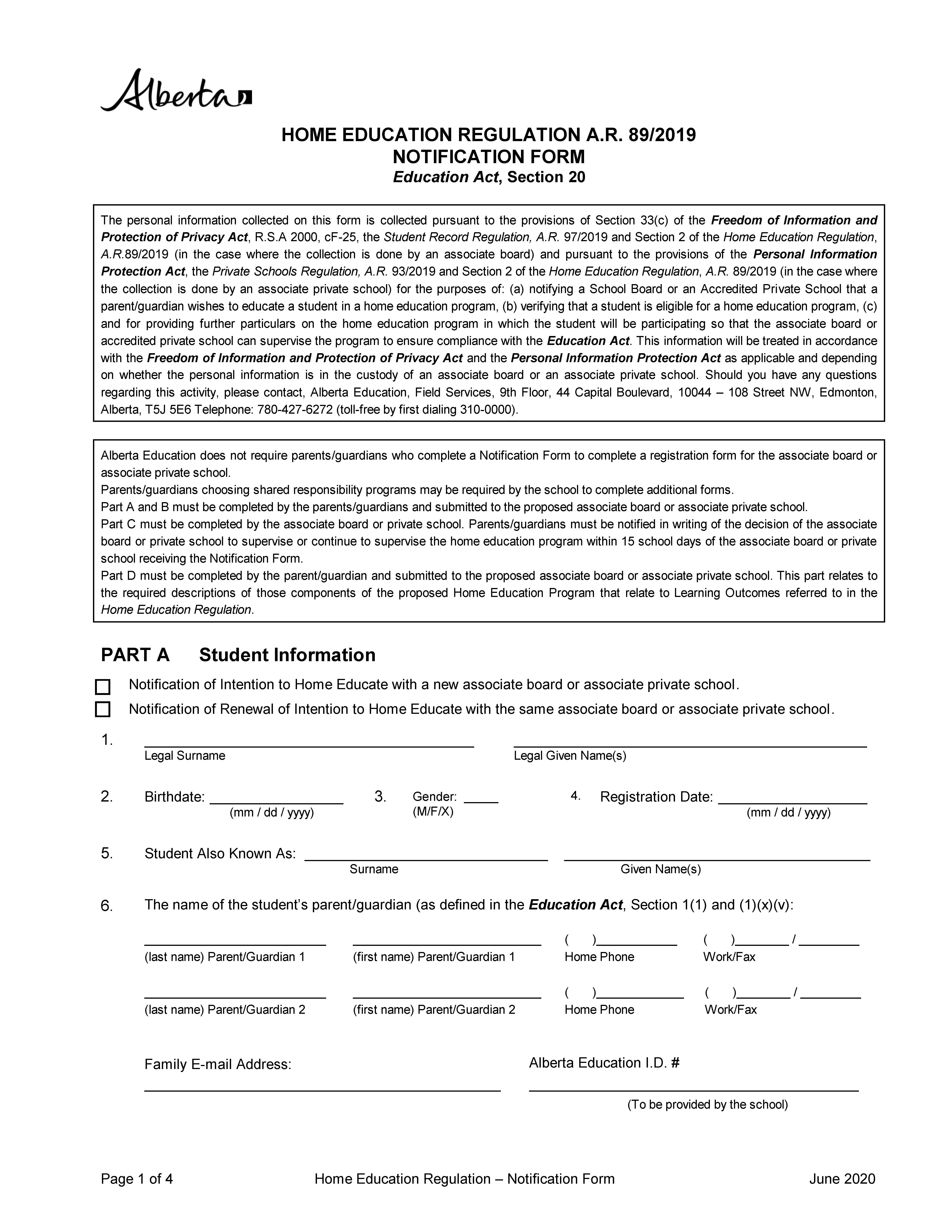
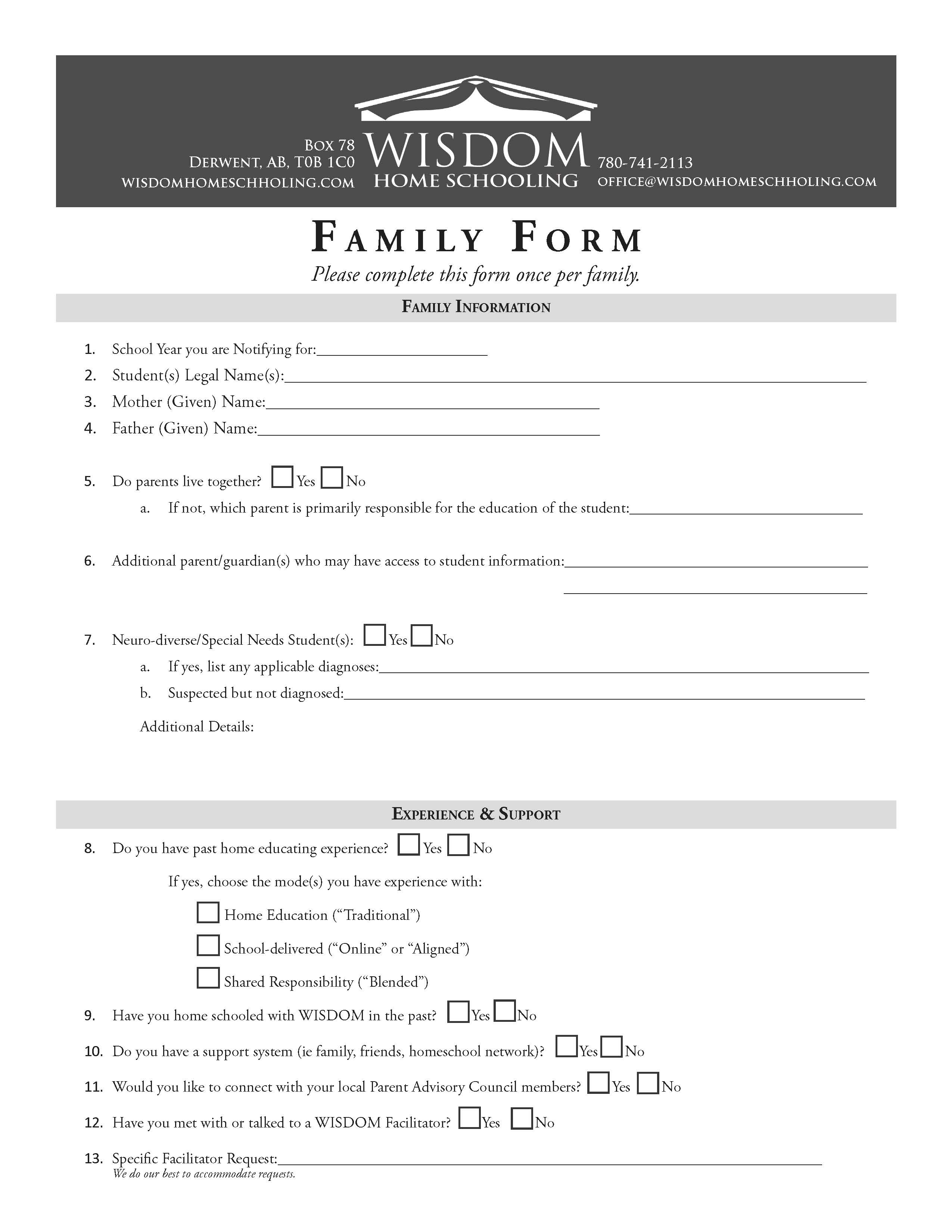
To join us, please complete a Notification Form for each child and one Family Form for your family information. We also require a copy of your child’s Canadian Birth Certificate (or proof of Canadian Citizenship). You may include an Education Program Plan (Part D) now, or send it to us separately. (Please note, the deadline for us to submit student data to AB Education is September 29. Please send your paperwork before then.)
The forms are fairly straightforward, though one common question on the Notification Form is regarding the Declaration by Parent (Part B), and the two checkboxes below. If you check the first box, you indicate that you will be using Alberta Curriculum at home, fulfilling all of the same outcomes as you would in school. The second option (most used by home educators) means that you will be creating your own plan for your child, using curricula that suit your goals and your child's learning style so long as your child works toward achieving the “Schedule of Learning Outcomes for Students Receiving Home Education Programs That Do Not Follow the Alberta Programs of Study”. You may view the Schedule of Learning Outcomes here. Please sign the form (both parents if possible), date it, and fax, mail, or scan and email it to us.
If you wish to receive Student Photo ID cards, useful for gaining discounts, free entry into some museums, etc), you may download and print from your Parent Portal Account. Instructions can be found here.
Once we have received your notification, we will contact you to let you know they have arrived. A facilitator will be matched to your family, and will make contact. If you would like immediate contact with a facilitator, please let us know. We look forward to serving you.
Home Education Notification Form:
Family Form:
You may attach your completed paperwork below to send to WISDOM as an encrypted file. You may email, fax or mail the family form, notification form and program plan, but we recommend that you send identification documents (passport/birth certificate) using the form below. Files will be encrypted and sent over a secure network.
If you do not wish to use the encrypted sender below, you may email the notification form to office@wisdomhomeschooling.com, or mail it to us at: WISDOM Home Schooling Box 78 Derwent, AB T0B 1C0.
Document submission
NOTE: We will respond to your submission within two business days. If you do not hear from us, please send your files again, because they have not come through.
Mediated Learning Program Manager

WHAT IS DYNAMIC ASSESSMENT?
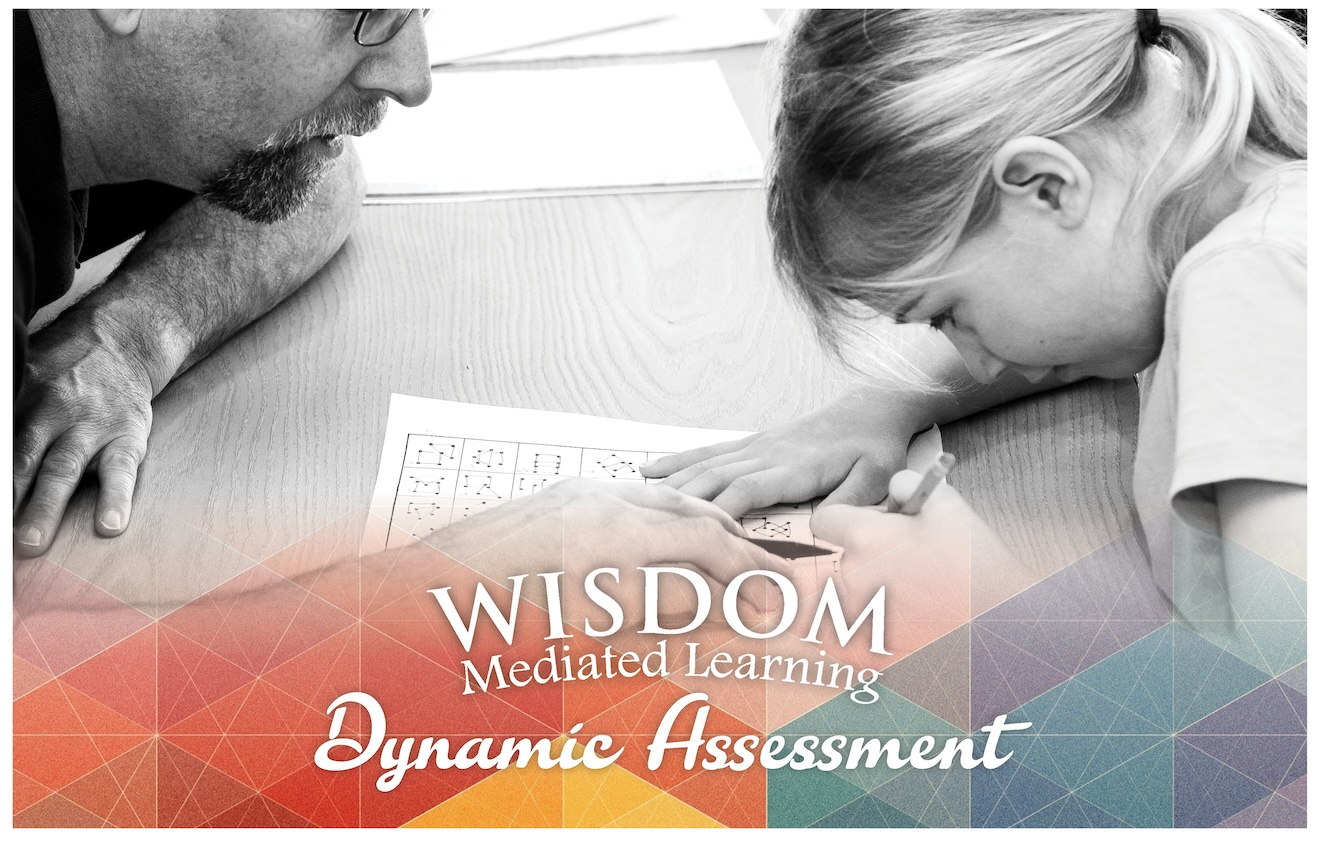
Dynamic Assessment (DA) is a service offered to parents through WISDOM’s Mediated Learning Program.
As the method used is mediational, this assessment is an interactive learning assessment, not a static test. The child has opportunity to learn and use strategies while being assessed and experiences an immediate personal change in ability to think.
During the assessment the parent acts as an observer, while the trained assessor presents the child with a series of instruments (problems to solve) that allow the assessor to evaluate the way the learner overcomes difficulties. The child is gently challenged with a variety of learning situations and is mediated throughout the experience. From this process, the parents are given information about what thinking processes (cognitive functions) need strengthening.
“DA is a unique learning experience for both the parent and child which brings to light the many areas where successful learning has happened already, and points to the most effective ways to continue the journey. Dynamic Assessment is a positive experience for the child. Learners usually emerge from the assessment with more confidence in their learning, optimism that they are not stuck in their challenges, and a sense of hope for their future. DA gives parents information as to how their child learns best, where learning is fragile and where it is strong. It is a valuable step in making brain changes that will bring your child to a place of solid success as a learner." -DA assessor
WHO CAN BENEFIT FROM A DYNAMIC ASSESSMENT?
Consider assessment if your child is experiencing learning difficulties that have been occurring over time (where a pattern exists), in order to give you greater insight into what the causes may be.
It is also helpful to the parent who wishes to know more about how their child thinks, see areas of giftedness, and gain deeper perspective on existing strengths.
The minimum age for assessment is recommended to be no younger than eight years old. A Dynamic Assessment usually takes five hours, with breaks provided- more or less time may be needed. The length of the DA can be discussed with the assessor.
Parents are briefed as soon as the assessment is complete, and first impressions are shared by the assessor. The results of the assessment are then examined thoroughly at the assessor’s office, and a written report is provided to parents. Recommendations are made and follow up support is offered.
It is strongly recommended that parents attend a Mediated Learning parent-training workshop before proceeding with an assessment for their child. Please discuss this with the assessor or program manager when making an appointment for assessment.
Assessments take place in Edmonton, Mundare, Derwent and Calgary, and may be arranged in other locations. This can be discussed when making an appointment.
WISDOM students are eligible for an educational subsidy that covers most of the assessment cost. The pre-subsidized rate is $1200, but WISDOM parents pay only $500.
For more information or to arrange an assessment appointment call the WISDOM office.
See Also: What's the Difference between Psycho-educational Assessment and Dynamic Assessment?
As their teacher, you will assess your child's progress on an ongoing basis, using the methods you detail in your Education Program Plan. From the Alberta Home Education Regulation: "4(1) A parent providing a home education program to a student, (a) must conduct an evaluation of the progress of the student at regular intervals and maintain a record of the methods and dates of those evaluations, (b) must maintain dated samples of student work and a general record of the student’s activities." In addition to dated samples of student work, this may include photos of student projects, parent journal notes.
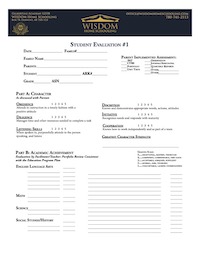
The Facilitator Evaluation is completed twice annually during your facilitator visit. Your facilitator will complete a portfolio review and interview, and the resulting evaluation forms part of your official student record. This basis of the evaluation is your Education Program Plan (EPP), meaning that student progress is compared to their own ability and not to other students.
The evaluation is designed to capture the initial level of the student in the Fall, and then measure their progress up to the point of the Spring visit.
Part A (Evaluation by Parents) is not strictly required. Part A is, in most cases, extremely helpful to the student, parent, and facilitator, and therefore to be completed by default. It is based on the desirable personal characteristics in the Schedule of Learner Outcomes. It is recommended, as part of educating the whole child, but a parent may wish to opt out of completing any part, or the entirety of Part A.
Part B, Academic Achievement, is the facilitator evaluation of student progress, based on the parents' EPP. Additional commentary is added as desired. From the Alberta Home Education Regulation "1(c): “evaluation” means a judgment as to the quality, worth or value of a response, product or performance of a student in a particular year, based on the activities selected by a parent to be focused on in a home education program for that year pursuant to section 3(3)." This means that learning may be demonstrated by multiple means, from oral, to portfolio and samples of work, to photos and discussion.
We are happy to provide links to additional resources that come from sources outside of WISDOM. If you have a resource to share with us, please let us know.
For more, please click on the links below, or on the menu at the right.
- Extras Available for WISDOM Families
- WISDOM Family Facebook Group
- Speech Language Pathology in Bonnyville or Online
- Occupational Therapy, Speech-Language Pathology, Psychology Through AISCA
- Alberta Home School Support Groups
- Home School Curriculum Suppliers
- Useful Sites and Educational Links
- Tutors For Hire Around Alberta
- Alberta Education Information and Resources
- Athletes In Action Summer Camps
- Mental Health Resources
- AHS Pediatric Rehabilitation Services
The links on this page are presented as a resource for visitors to WISDOM's website. WISDOM takes no responsibility for the content of these sites and the presence of a link here does not imply any endorsement of a site, the services offered, or the information that site may contain.
Conference Details Register Now Presenters Exhibitors Resources Schedule
Register by February 13 for early bird prices!
We are delighted to announce that registration is now open for the 2026 Home Schooling High School & Beyond Conference, themed Ignite Your Potential!
📍 Spruce Grove Alliance Church 250 Century Rd, Spruce Grove
📅 Friday, March 27 and Saturday, March 28, 2026
💵 Early bird prices: $85 per person or $295 per family
💵 After Feburary 13: $100 per person or $350 per family
This two-day conference is designed to inspire, equip, and energize home educated students (ange 12+) and their parents as they navigate the high school years and look ahead to life beyond graduation.
Friday will focus on discovery, with hands-on breakout sessions and mini-workshops that help students explore interests, strengths, and real-world skills, framed by engaging keynote talks.
Saturday will feature inspiring speakers and rich opportunities to connect with post-secondary institutions, employment pathways, and career inspiration, helping students envision what’s possible and take meaningful next steps.
Last year’s conference filled to a wait list, and we expect the same this year. Space is limited, so we encourage families to register early to avoid disappointment.
Register by February 13 for early bird prices and join us for an unforgettable weekend designed to ignite confidence, curiosity, and purpose.
We look forward to welcoming you in March!



Are you ready to improve your child's learning?
WISDOM's workshops will help you apply mediated learning in your home. If you are a parent who learns by doing, you will find our workshop format very helpful.
In-Person: Day-long, practical, hands-on events are available in major centres across the province. After a day of immersing yourself in mediational methods, you will be surprised at how easy it is to have an immediate and lasting impact on the way you home school.
Online: Join a series of 2-hour sessions that will include instruction, parent participation, and opportunity for Q & A. As participants meet in a virtual classroom, a strong internet connection and a microphone/speaker are required.
Materials for the Mediated Learning workshops are protected by copyright. Recording of any session is prohibited.
Click here for upcoming ML workshops.
About Our Workshops
 Foundations
- Spark learning for every student: challenged to gifted.
- Through activities, discussions, and skill-building exercises, get a solid grasp of the foundations of the mediational teaching method; learn to apply it to any child, using any curriculum.
- Understand how the brain learns best and how Mediated Learning can be incorporated into family life.
- Access tools that make learning engaging and meaningful for your child.
- Explore the importance of parent/child attachment and learn ways to keep it healthy.
- Discover problem-solving techniques that help to strengthen cognitive weaknesses.
- Leave the workshop with firm personal and family goals in place, as well as a plan to achieve them.
The Foundations Workshop is a recommended, though not required, prerequisite to attending any other Mediated Learning workshop.

Behaviour
- Go from conflict to cooperation.
- Find positive ways of addressing behavioural challenges.
- Grow in skills which help in dealing with delays, blocking, fear of failure, fear of succeeding, lack of confidence, and argumentative behaviour.
- Learn nine key areas of living, performance, and stability.
- Engage in personal and group activities that will increase your ability to identify learning barriers and address frustration.
- Bring your home to new place of success and peace.
Critical Thinking
- Brain building workshop.
- Use Mediated Learning in practical ways: Focus on logic, organization, problem-solving, and planning.
- Learn specific strategies to focus the learner on thinking processes and awareness of change. “How did you solve that problem?” “What did you use?” “How can you help yourself?”
- Learn the kinds of questions that trigger critical thinking and help children become solution-focused.
- Become more confident in applying Mediated Learning to any challenge.
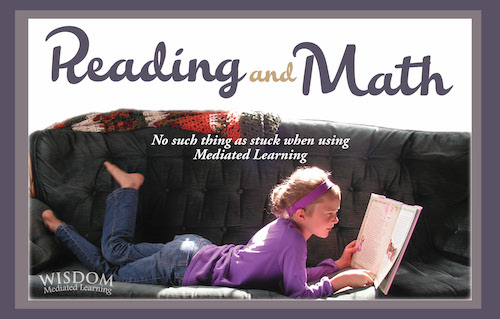
Reading and Math
- There is no such thing as stuck.
- Use Mediated Learning to work past reading and math difficulties.
- Explore readiness.
- Learn about perception challenges (dyslexia/dyscalculia) and how to work with your child.
- Learn the roots of reading and math issues, and direct this knowledge toward a fresh start for children wounded by negative experience.
- Receive tips and proven strategies.
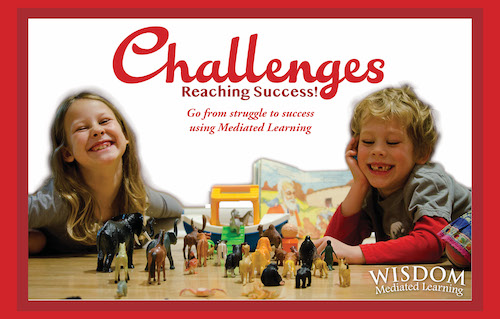
Challenges
- Go from struggle to success.
- Explore student attitude and belief by using the mediational method.
- Assess weaknesses and strengths.
- Help children struggling with focus, memory, confusion, processing, frustration, planning and learning delays.
- Come away with an action plan.
- Come away with hope; moving from "I can't." to "I can."

Mediating High school
- For youth 13 and older, with at least one parent attending.
- Directed to students, helping them become more self-directed.
- Focus on goal-setting, staying motivated, healthy study and healthy living.
- Receive effective tools for becoming more responsible and mature.
- Learn to self-mediate, to ask meaningful questions, and to grow as critical thinkers.
- Explore “calling”.
- Take charge of behaviour and learn to plan for the future.
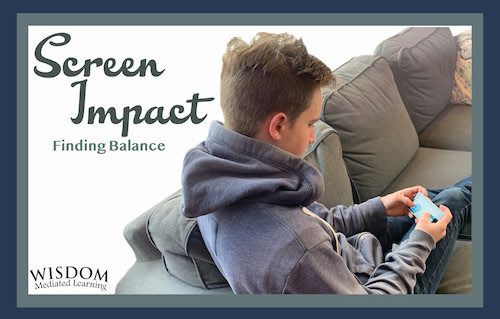
Screen Impact
Technology: Finding Balance
- How much is too much?
- Learn the signs of too much screen time and what to do when there is.
- Learn how to find and maintain a healthy balance in your home.
Fees and Schedule
Online Workshops
Offered to WISDOM families in 3 weekly sessions.
In-Person Workshops
Let us know if you'd like one in your region.
Click here for upcoming workshops
Check back frequently for updates and changes.
"The presenters did a wonderful job! Loved that we did activities that were challenging. It was a good reminder for me to understand my children better and to have more patience and understanding when they don't grasp a concept right away."
— WISDOM mom

If you have further questions after reading through these, don’t hesitate to join an information session, call the WISDOM Office at 780-741-2113, or use the chat function below.
Q. What is Home Schooling?
Q. What is (Parent-Delivered) Home Schooling? (What are the different types of home schooling?)
Q. Why do families home school?
Q. Are parents qualified to teach their children?
Q. Is home schooling legal?
Q. How much time does it take?
Q. How can we teach several children at once?
Q. What about socialization?
Q. What about my child's special interests?
Q. Can Home Schoolers get a high school diploma and attend university or college?
Q. What materials are available?
Q. What methods should I use?
Q. What about children with special needs?
Q. How does WISDOM receive, divide - and use - educational funding grants?
Q. How do we get started home schooling?
Parent Portal Questions
The following questions will take you to a page just for questions about the Parent Portal.
Q. Are we obligated to create and use this portal for our family? I prefer to keep my personal info out of 'clouds' and other servers.
Q. How will I access student information?
Q. Does this give AB Education access to our Education Program Plans (EPPs)?
Q. Which option we pick for the declaration of outcomes?
Q. We will not be returning to WISDOM Home Schooling (The Gilbertine Academy S2338) for this coming school year. Do we still need an account?
A. With parenthood comes the responsibility of educating our children. We begin teaching from the very first day, helping our children to find security in us; and then throughout their early years teaching them to walk, speak, feed themselves, toilet train, along with the myriad of life skills a young child comes to know. Reading, writing, numbers, science, and social studies are no harder to teach, and up until the last century, the home was the environment where these skills were taught. Schools as we know them were established primarily out of charity toward the children of illiterate parents. The methods employed in teaching children at home differ substantially from those required in a classroom and generally tend to be more informal and open-ended. Rather than organizing their time around managing a classroom, home schoolers focus upon individual student strengths and weaknesses and organize each day around making the most of the learning opportunities at hand. Home schooling is not merely school at home; it is a way of life.
Q. What is (Parent-Delivered) Home Schooling? (What are the different types of home schooling?)
A. The term used by the Alberta Department of Education to describe traditional home schooling is “Home Education.” Parents who “home educate” retain full authority to plan and provide schooling to their children. Parents have the right to teach according to their faith, goals, and time-lines; free to follow their vision rather than the vision of someone outside of their home.
In a “Shared Responsibility" program, the parents teach part of the program, and a school teaches the remainder. On-line schooling is considered a school-delivered program, with the school taking responsibility for the content, scheduling, and grading of the student. Fully school-delivered programs generate full funding for the associate board, and the parents have little to no input into what is being taught.
WISDOM has seen the success that results from full parental control of home schooling and affirms the parents' right to teach their own children. Unfortunately, parents often lose confidence in their own abilities once they have deferred to a school to provide the at-home education to their children. Many students in school-delivered at-home programs find themselves back in school within a few years. This contributes to WISDOM's decision to support only Traditional home schooling; properly speaking: only “Home Education.” We will work with you to meet your goals and fulfill your regulatory responsibility. We will assist you with program choices and other important education decisions, but we maintain that you are the primary educator, and you call the shots for your children.
For more information about different types of learning at home, such as Shared Responsibility or School-Delivered/Aligned, please click here.
Q. Why do families home school?
A. Parents make the decision not to delegate the education of their children to others but rather commit the time and energy themselves. Families have a variety of reasons for home schooling. WISDOM's founders began because they wanted to integrate their children's overall character and moral development with their education, realizing that "if their prayer life and the study of faith was not in order, education became fruitless.” Many parents who begin to home school for purely academic reasons soon find themselves growing in other areas as well. Relational problems that are less visible to parents when their children are away all day become far more evident when the family lives in close proximity day in and day out. In a homeschooling setting, parents more effectively identify and deal with these formerly obscured issues. Although family life seems more demanding in the short term, home education leads to strong relationships and renewed capacity for learning. Approaches to academics vary, but most home schooling families tend to emphasize a good, wholesome life, growing in respect for one another.
- There is opportunity to centre the daily schedule around prayer/meditation and faith study, rather than these becoming relegated to "when there's time".
- Each student's curriculum can be custom designed.
- Parents may conscientiously choose social activities.
- Parents can build in time to think, plan, explore, question; all within a safe environment.
- Schooling can be scheduled around the parent's work, family responsibilities, etc.
- Schooling can be designed to fit the learning and teaching styles of the family, some structured, some flexible, all unique to some degree.
- Communication between family members is enhanced.
- Tutorial-style education helps each child achieve their full potential.
Q. Are parents qualified to teach their children?
A. An important difference between you and a classroom teacher is the love you have for your child and the fact that your educational commitment is not one academic year, but a lifetime. These two points give you a distinct advantage, though it sometimes takes a bit of adjustment before you can make the most of this advantage. Confidence grows with experience, but a cooperative school board can shorten the time it takes to gain your feet. Research has proven that the academic achievement of parents has no bearing upon the success achieved by their home schooled children. If you can read and write, you can teach your children as effectively as can the parent with a PhD in Education. Research demonstrates that a child's academic potential is governed by factors other than the educational level of his parents. A loving parent is the nurturing ingredient that will bring a child to full potential.
Dr. Brian Ray, president of the National Home Education Research Institute, has conducted numerous studies on the effectiveness of home schooling, demonstrating that the average home school student's academic achievement was very high. Dr. Ray says, "The tutorial method has always been the superior method for education of children. Home schooling epitomizes this method, providing the essentials for success--a close relationship between the student and teacher, motivation, flexibility, and individualization."
Several resources are available to give you the preparation and training you need:
- The Successful Homeschool Handbook, Home Grown Kids, and Better Late Than Early, by Raymond and Dorothy Moore
- The Three R's by Ruth Beechick
- How to Home School by Gayle Graham
- Educating the Whole-Hearted Child by Clay & Sally Clarkson
- Speak to at least one veteran home schooler (try the WISDOM Parent Advisory Council, if you don't know anyone who home schools).
- Home school conventions, workshops, and curriculum fairs provide practical instruction in teaching techniques unique to home instruction.
- Support groups can greatly encourage and help you through the exchange of ideas. (From the founder: "Personally, in the early years, I derived my greatest benefit by having other adults whose judgement I trusted, experience the progress my children were making. Their perspective was extremely valuable at times when I was too close to perceive how much my children had actually improved.")
A. Each province and state sets its own laws governing home education. In Alberta, if parents intend to home educate, they must notify their own resident school board, or an associate board or associate private school.
WISDOM Home Schooling is the home education department of The Gilbertine Academy, which is operated by The Gilbertine Institute, Calgary, and is operated by professionals who are personally experienced in home education. WISDOM complies with the regulations of the Education Act while helping to make home schooling easier for parents and more effective. Accountability serves to keep us organized. Look for an associate board or associate private school that has understanding and experienced staff, who can look at your family from a personal perspective.
A few home education administrations in Alberta make a point of hiring home educating facilitators and/or staff. WISDOM makes it our policy. All of our facilitators, and full time office staff, were either home educated themselves or are home educating parents.
Legislation is continually being reviewed in each province, making it important for you to work with home school organizations, especially the Alberta Home Education Association and others like it to aid the passage of favourable legislation. Constitutional rights to liberty and privacy and the free exercise of religion under the Canadian Charter of Rights and Freedoms guarantee parental rights to educate their children according to their convictions. However, school boards have ruled inconsistently in applying these rights to home education. WISDOM helps families comply with the law without compromising integrity as parents and educators. It is important to obtain a copy of the Alberta Home Education Regulation. Many problems can be avoided by being accurately informed and by using tact and respect in dealing with authorities, or other people who don't understand home education. Consider joining the Home School Legal Defence Association of Canada. They are an excellent ally in the effort to maintain parental rights.
Q. How much time does it take?
A. Although teaching your own children does require a time commitment, it isn't as demanding as you might expect. You can achieve a great deal more in far less time than required in an institutional setting. The time required will depend upon the approach you take and the resources you use, but you will likely begin with a half to one hour, per day, for the early grades, three hours by junior high, and older children, mostly working independently, will spend up to six hours through high school. Mature students usually study music, perhaps work part-time, often read more than average and spend time preparing for post-secondary work or study. Be aware that, if you are taking more time than seems necessary, you may have imported "school" into your home. Due to the number of students in a classroom, schools attempt to teach by the use of packaged tasks or "curriculum." Fortunately, children learn more and faster if they are allowed to function in the practical world rather than just studying about it in a textbook. Parents will find that capitalizing on informal teachable moments throughout the day will allow them to avoid lenthy formal study times, especially for younger child. Above all, a balance of practical activity and good reading material forms the heart of an effective education.
Q. How can we teach several children at once?
A. Many subjects can be taught to various levels at once, demanding more complex thinking, more lucid expression, and more effective writing of the older children and less of their younger siblings. Older and younger children can gain much by learning together for the good of all (consider the excellent education received by students in one-room schoolhouses, where the more mature thought processes of older students then benefit younger students who are listening). Children who are close in age can do much of their work together. Many families find it helpful create opportunities for independent learning (reading, research, videos, crafts, worksheets, etc) for their children, and then spending focussed time with direct instruction of one child at a time.
A. Once you have home schooled a year or two you will look back at this question and say, "what was all the fuss about socialization?" Because most children in western culture spend most of their time among same-age peers, we have come to assume that this is normal. Have you ever wondered why the Creator put children in families where nobody (unless you are a multiple) is your age? The best environment within which to grow socially is a multi-age group. There is significant benefit to maturing in an environment where you must interact daily with those older and younger than you; responsible for the good of each other and learning from others at the same time (this includes the parents). Healthy relationships are best taught, demonstrated, and reinforced at home and in service to others as family outreach. As you get to know other home schoolers you will be impressed at the responsibility these children bring to their relationships. Their well-mannered confidence is a tribute to the environment their parents create. One of the greatest dangers to our children is peer dependency. It is only after years of careful formation that our children can be a testimony to others without being negatively influenced by them. The home is the environment for this careful formation. A recent US study has verified that the self-concept of home schooled children is significantly more positive than average. These young people know who they are.
Q. What about my child's special interests?
A. A wealth of experiences outside the home can supplement and enrich home education. Field trips organized by your family or in cooperation with one or more other families offer excellent opportunities to share fellowship and learning. The classroom of the world around you is the one that can teach you the most. Books are an excellent means of learning about those things the student can't access personally but, where possible, home schooling parents can immerse their children in the practical aspects of life, from pond life, to museums, to doing laundry and dishes. The internet provides a plethora of learning opportunities and resources. Other interests such as musical training and amateur sports tend to fit well in a home education schedule.
Q. Can Home Schoolers get a high school diploma and attend university or college?
A. In the USA, more than 200 institutions welcome home-educated students, not based upon official academic records, but rather upon individual merit. They are assisted by the track record established by previous home schooled students, who tend to be mature and capable of thinking for themselves, proving to be independent workers who set their own goals and schedules. Many prestigious universities (including Yale) encourage home schoolers to apply and offer admission based upon an entrance exam.
In Alberta, home schooled students may earn high school credits and graduate with an Alberta Diploma. Conversely, they can set their own criteria for graduation and finish with a WISDOM Parent Authorized Diploma. There are different entrance requirements for various post-secondary institutions, but all are attainable through home schooling. All universities and colleges (even the ones who have no policy for home schoolers) have a "special admissions" option that looks at the individual merit of an applicant and can admit anyone who can demonstrate ability. For some situations the SAT can be used for college or university entrance. Read: Homeschooling for Excellence by David and Micki Colfax. The parents did not attempt to follow a typical school curriculum, and their 3 oldest sons entered Harvard. The children enjoyed a blend of wilderness subsistence farming and good books. Also be sure to ask the WISDOM Office for a copy of our High School Information Book.
Q. What materials are available?
A. Many common textbooks are available from curriculum publishers and from other sources, offering depth and a logical order of topics. Work texts combine textbook information with exercises in consumable write-in books. Unit Studies allow a parent to integrate the teaching of values, skills, Science, and Social Studies... by following specific themes. Using a Classical Approach, children progress from memory and skills to advanced reasoning and expressive use of language. When applying the Principle Approach teachers and students keep notebooks containing Bible perspectives and principles, personal applications, and other specific information on the subject. Whatever the approach, don't forget the extreme value of good reading material & real life experiences. Once a student has learned the basics of language and numbers, abundant learning comes through reading good literature and engaging in good discussions. Remember to use those normal everyday activities like laundry, chores, music, and dishes to teach skills and character development; and great books combined with probing discussion to teach thinking.
A. Your first year will require a calculated guess. Many parents choose to simply use what their home schooling friends are using. You may not be in a position to make curriculum choices until you have actually worked with each child to discover learning style, strengths, and weaknesses, interests, and abilities. You will also discover your own teaching style, the demands upon your time, priorities, etc. Whenever possible, you will take time in your first year to talk to other home schoolers and look at resources. By the time you begin your second year, you will be more confident to make many of your schooling decisions. Don't forget to keep researching different methods of education.
Q. What about neuro-diverse children with special learning needs?
A. Neuro-diverse (ADHD, dyslexic, Asperger or Autism-spectrum, anxiety, Tourette's syndrome, and gifted) children are particularly well-served by home schooling by working at their own pace with material that is suited to their individual needs. Learning is best served in an environment where the student has a strong relationship with the teacher, and nowhere can this be achieved as effectively as within the context of the family. Consistency and discipline are the key strengths in special needs home education. Dr. Brian Ray, president of the National Home Education Research Institute, affirms, "Research comparing home educated to public school learning disabled students found higher rates of academic engaged time, and greater academic gains were made by the home educated. ... parents, even without special education training, provided powerful instructional environments at home...." WISDOM offers parent training for teaching neuro-diverse students. (See more here.)
Q. How does WISDOM receive, divide - and use - educational funding grants?
A. For each student whose parent has given notification by September 30, we (Gilbertine Institute) receive a total grant of $1802. The parent may fund learning resources by claiming up to 50% of the total of the funds ($901), per student, per year. Alberta Education allocates the funding to the school authority at a rate of 10% per month from September through June. We make half available to parents in Fall and half in Spring. The student support portion of the funding covers facilitator and staff salaries and operational costs, as well as subsidizes additional services and supports that WISDOM provides to families.
Some families choose to not access funding, and some families choose to allocate their unclaimed funds to The Gilbertine Institute for use in the WISDOM department for family support. These families help us provide for unfunded 'rescue' families who join us throughout the school year, as well as contribute toward extra help for special needs consultation, tutoring, and family counselling.
Q. How do we get started home schooling?
A. Pray (or discern in your own way), and, if you have a spouse, agree together as team on your decision to home school. Then, set long term goals for your children, writing down what you ultimately want for them. Once you have done this you will have accomplished the most important foundational task for your home school. From there, you can work backward from these goals to decide how to structure your time and tasks right now. Above all, start simply, and avoid trying to create a typical school in your home. This isn't "school at home". This is working toward providing the best possible education for your child.
This great resource is full of information, inspiration and ideas. You will find encouraging and uplifting articles, curriculum reviews, success stories, and "how-to's" from our tean of professionals and other fellow home schoolers.
6 issues per year for $30 - $44 outside of Canada
Click here to subscribe now.

WISDOM is well known for offering full support to families as students complete high school at home through any one of a wide variety of paths.
To view an outline of your home school high school options, please view our High School Handbook and High School Credits Handbook below.
Things You Should Know:
- Students may earn the Alberta High School Diploma, including 100 credits. The final exam mark is worth 30% of the final mark, and the school based mark is worth 70%.
- Or, they may earn a high school transcript with the home school based mark with a weighting of 70% of the final mark, and the departmental exam mark comprising 30%.
- As an alternative, students may earn WISDOM's Home Schooling Diploma with a Parent Authorized Transcript of Marks.
- Students can access specialist help for High School Math, Physics, Biology, Chemistry, and English.
For a thorough description of high school options, see our High School Information Handbook and High School Credit Handbook, below. Print copies can also be requested by contacting the office.
Home Schooling through the high school years opens up the opportunities of a young person to pursue their dreams and goals. Learn more here about your options for home schooling through high school, information on post secondary options, upcoming high-school related events, and success stories from home schooled grads and their parents.
During visits with high school students, faciltators complete a High School Programs Choices form, which helps the family set concrete goals for high school at home.

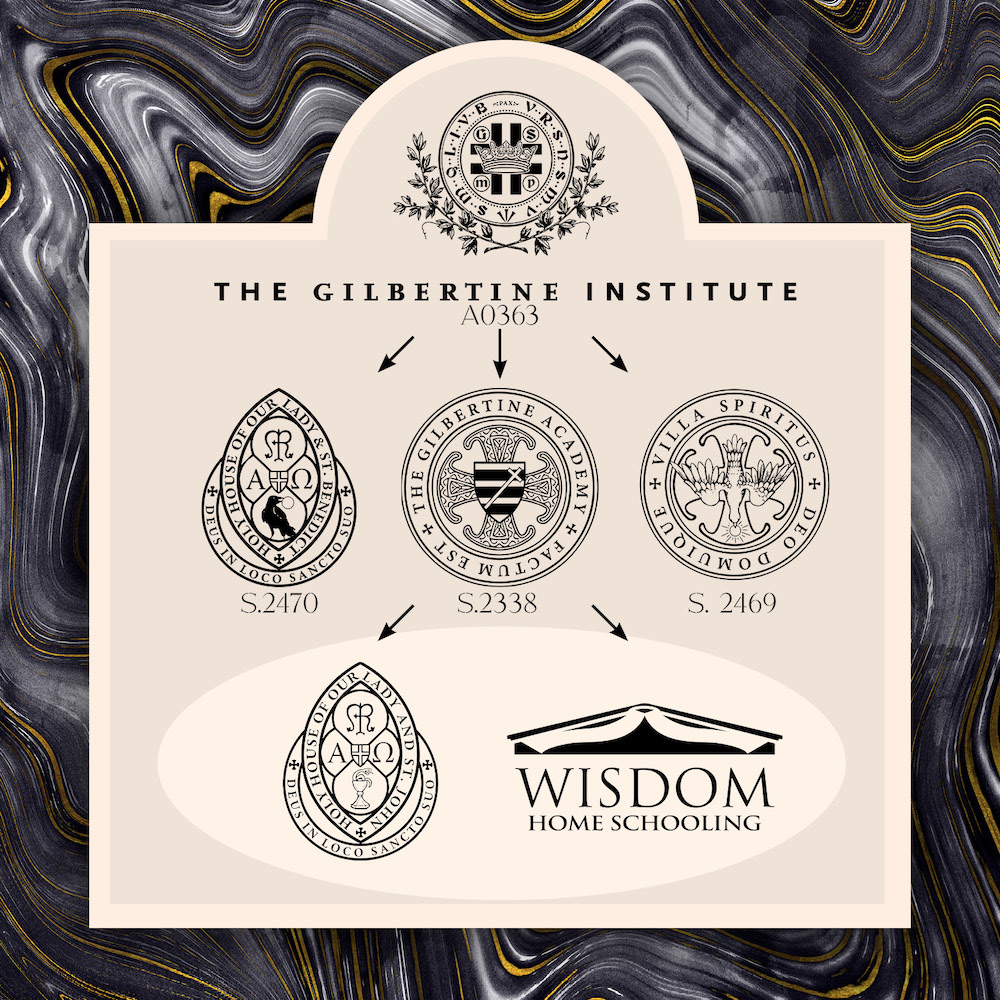
The Gilbertine Institute (A0363) is a registered charity and non-profit organization which operates an associate private school, The Gilbertine Academy (S2338). WISDOM Home Schooling is a registered trade name of The Gilbertine Institute, which supervises and supports home education programs. The society board, campus, home education administration and staff are wholly supportive of home education.
According to the Home Education Regulation, The Gilbertine Institute is the "person" or society which is responsible for the operation of the accredited private school that supervises and supports parents' home education programs. In practise, The Gilbertine Academy supervises and supports home education programs through the WISDOM Home Schooling department.
Alberta Education Resources:

Your Education Program Plan (EPP) is your most important document. It defines your home education program, assures your authority, and prevents imposition of provincial testing. Your plan is flexible, and you may change it at any time in the year. Your current (or revised) plan must be approved by your facilitator and kept on file in the WISDOM office.
In order to give your facilitator time to review your plan, suggest additions, and approve your plan, please provide it to them no later than the end of August.* If you need assistance to meet the Aug 31st deadline, please let us know. A suitable Education Program Plan (EPP) can be discussed and developed with your facilitator. *NOTE: This deadline is for returning WISDOM families only. Brand new families have some grace time to work on a plan draft and go over it with a facilitator.
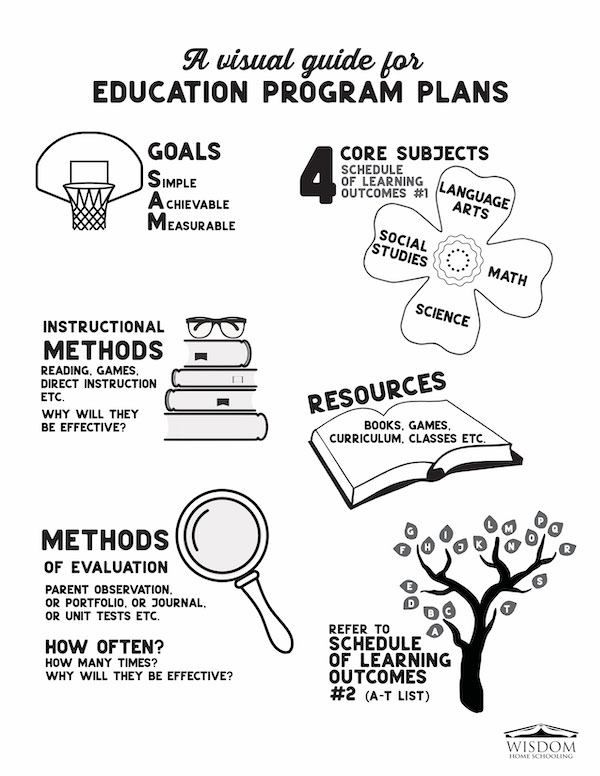
Please follow the Checklist to be sure that your plan meets the requirements of Alberta Education. Click here for a visual guide. (Refer to the Notification Form, Part D.)
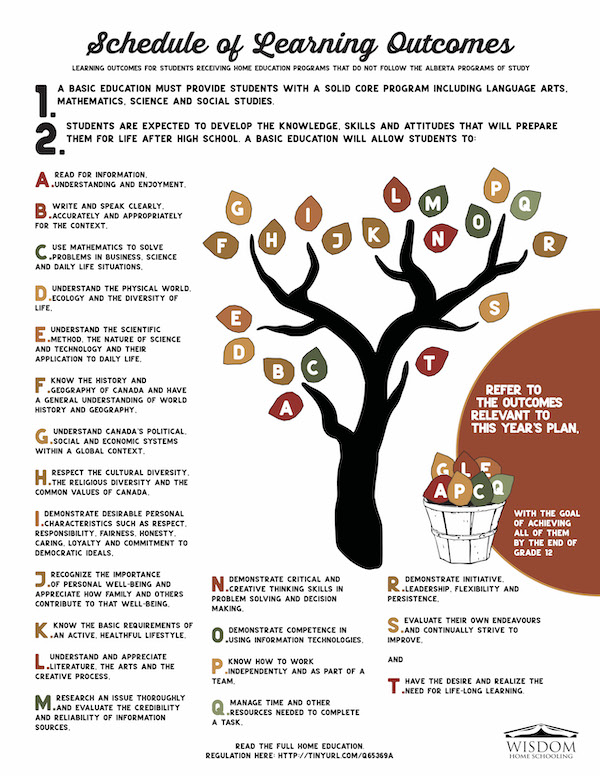
Your plan should be based on Alberta Education's Schedule of Learning Outcomes. These outcomes are to be achieved by the end of grade 12. Remember S.A.M. when you plan: Keep your plan Simple, Achievable, and Measurable.
Program Plan Template:
You may customize the following template Word document to suit your child. If you prefer, you may create a plan of your own design, or one you've found elsewhere online, ensuring that you include all elements from the checklist.
2026-2027 Education Program Plan Template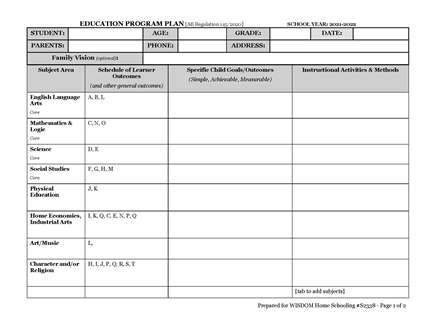 Download as:
Microsoft Word | Apple Pages | Google Docs*
* Once you've opened the Google document, go to File > Make a Copy in the menu to create your own editable copy in Google Drive.
Suggestions of ways to state various Instructional Methods, click here.
Sample Education Program Plans:
- Grade 1
- Grade 5
- Grade 9
- Grade 10
- Thinking of obtaining Alberta High School Credits? Microsoft Word Format Google Docs
Plan Approval and Revision:
Note: if you don’t have anything to add or delete in your child’s EPP, these instructions will not apply to you! However, it is normal for families to change their plan throughout the year as new opportunities and/or curriculum ideas come up.
- A facilitator needs to review and approve your plan before your enrolment will be complete. Our team prefers that plans are submitted no later than May 31, prior to the new year commencing. The facilitator confirms that your plan meets the requirements set forth in the Home Education Regulation. After your plan is accepted, applicable funding will be available (when the new school year begins). Without an approved plan, enrollment is not complete.
- Your plan is a living document, and may be modified at any time. Throughout the year, we need your current plan in order to support any reimbursement or purchase order, particularly in cases where you may with to claim resources other than books and curriculum. Please submit any updates before submitting an expense claim. Update your plan and send it to your facilitator when there is an addition or deletion of a subject or the addition of a non-book resource within an existing subject, up until May 31.
- Examples: update if you went on a field trip not listed in your existing plan and want to submit receipts for the student admission.
- Update if your child starts learning French using Rosetta Stone, which you just purchased and wish to claim for reimbursement.
- However, you don't need to update if you're replacing one resource with another of the same kind. There's no need to update if you simply change from Saxon math to Math U See, for example – it’s all math.
Your plan gives you the ultimate freedom and flexibility to meet your child's educational needs in real time. We're here to help you craft an excellent plan - don't hesitate to reach out!
Attention WISDOM families!
You are invited to attend a Family Gathering in your area (or more than one, if you wish). These events are a great opportunity to visit with other WISDOM families, facilitators, and Parent Advisory Council members.
While our Spring Socials and Information Sessions are open to the public, Fall Socials/Gatherings are for WISDOM families only, giving us a chance to get to know each other as fellow home schoolers.
Click on an events link on the right for details and to register for these free events.
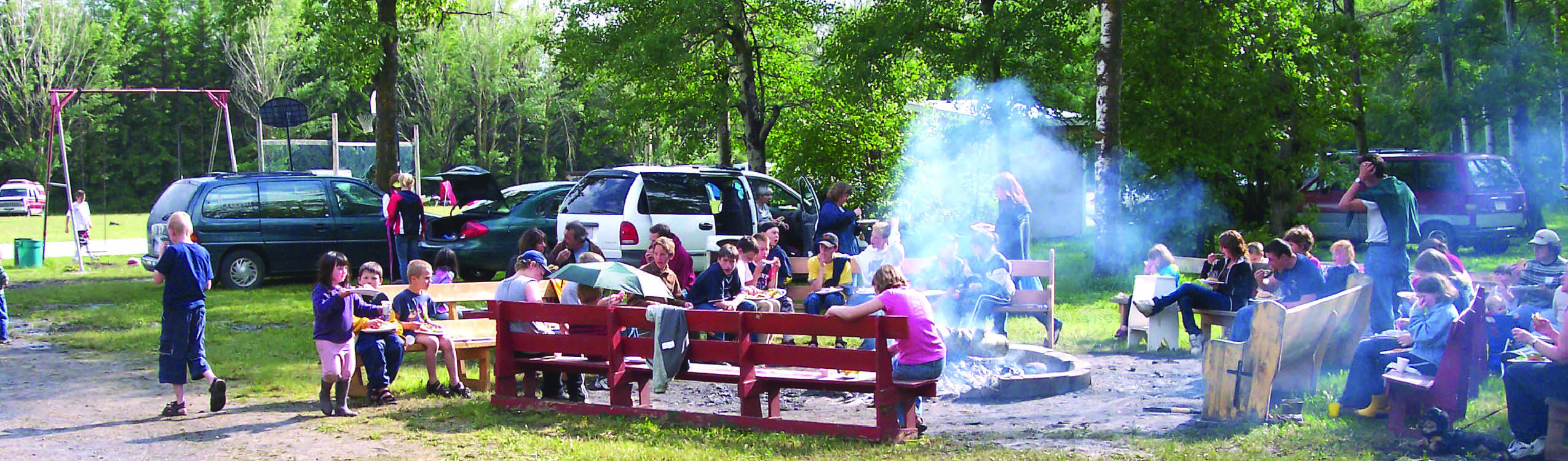
WISDOM FAMILY CAMPS
Family Camps are an important part of the WISDOM experience. Sessions are led by qualified instructors, but beyond learning together, time is built in to each camp for home schooling parents and children to connect and share with each other. Respect, generosity and community are essential elements of WISDOM Camps.
To Register for any camps or to see what camps are currently taking registrations please click on this link, and check the list on the right.
Families are required to have at least one parent participate with their children. If your family is coming with younger children who cannot participate, it's important to have two parents attend, or to arrange with another family to swap out participation with older children and minding younger children. Each event will have slightly different needs, so let us know if you have questions about how much involvement is needed.
Please note whether or not meals are included in the price, and plan accordingly. Having you provide some or all of your own meals helps us to keep camps as affordable as possible. Potlucks are a great way to get to know fellow campers and are often part of an event.
Register early. Many camps fill up quickly and have limited space, so pay close attention to registration deadlines. Please register as soon as possible, and no later than any posted deadline. This allows us to plan for the needs of the camp in advance.
- You may use an internal purchase order if you have funding available and if you register for the camp before May 21. Many families wait to send in receipts until they have booked all of their camps and workshops for the year so that funding is used first for registrations.
- WISDOM accepts Visa and Master Card, as well as Visa Debit. We will issue a receipt which you could then use to claim funding for applicable charges when funding is next released.
- You may pay by e-transfer to wisdombilling@gilbertineinstitute.com.
- WISDOM accepts cheques, made out to The Gilbertine Institute or to WISDOM Home Schooling.
Remember, an event can't run without sufficient numbers to offset costs. Because we don't charge much more than absolutely necessary to cover costs, we must have a minimum number of participants registered.
Cancellation: If we have to cancel an event due to low registration, we will refund your money. However, if you cancel within two weeks of a scheduled camp or event, your money can not be refunded. Without the necessary funds, your last-minute cancellation may otherwise close down an entire event.
QUESTIONS? Please contact the WISDOM office. We look forward to helping you. 780-741-2113 or email events@wisdomhomeschooling.com
WISDOM's office staff pause at 3pm each day to lift up our families' needs in prayer. Join us in praying for our families, staff, facilitators, and other intentions. You can find our current calendar of intentions, provided by the Parent Advisory Council, below.

To order print copies mailed to you free, please email office@wisdomhomeschooling.com or call the office at 780-741-2113.
New! Faith, Family & Home Schooling - Volume 1
A collection of articles to encourage families of faith to include faith activities in their homeschool day (and week) and to encourage faith to grow in our hearts.
FOR FATHERS - Volume 1
 The success of a home school depends greatly on a unified approach by both parents. When a father is supportive of, present to and engaged in home education, children show a marked improvement in motivation and achievement.
FOR FATHERS - Volume 2
 This booklet is full of encouragement and tips for the Home School Dad. Most articles are written by home school dads FOR home school dads! Why not order one for yourself or to share?
NEW! Fun Home School Activities with WISDOM – Volume 1
A collection of fun activities through the year for WISDOM families with children of a variety of ages. Activities include recycling, Lego, connection, space, summer (and Canada Day), winter and ice, nature, speech therapy ideas, art extras and more.
GAMES THAT BUILD THE BRAIN
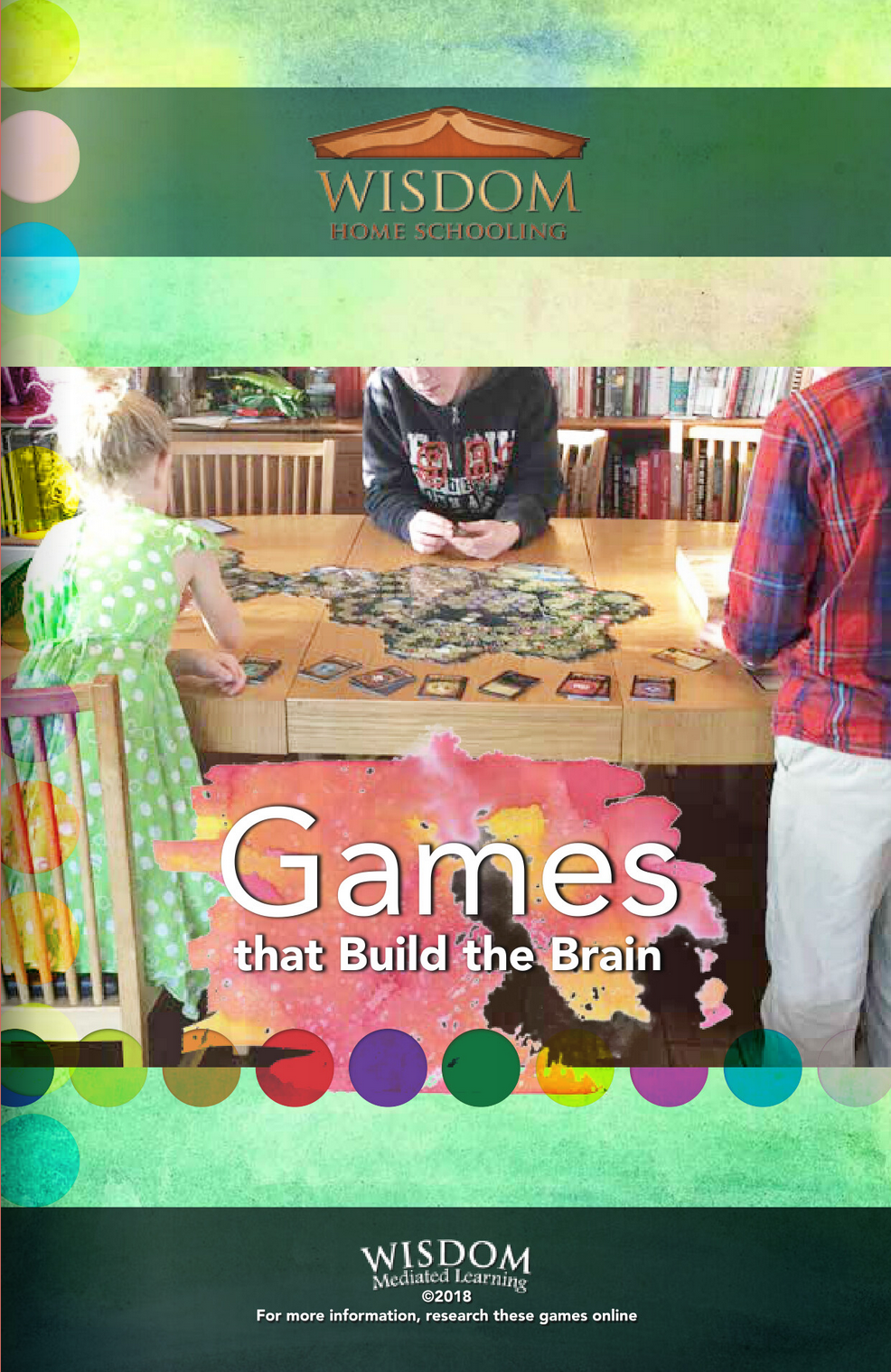 Studies show that board games are also very educational and healthy for our brains! Increases in memory and math skills, as well as preventing or slowing down cognitive aging, are becoming obvious benefits to playing board games. In addition, some games are designed specifically for educational purposes.
HIGH SCHOOL - Volume 1
 Home schooling our child through high school is often challenging, and most parents feel at least some insecurity about achieving their goals. WISDOM's mission is to help you hold on to your vision, and to home school all the way through high school. These inspiring and encouraging articles were previously published in The WISDOM Family Magazine and have resonated with parents so much that we offer them again in this compilation.
If you have questions about home schooling through high school, including what methods and options are available to you, please don't hesitate to let us know. We are here to help.
HIGH SCHOOL - Volume 2
 Home schooling through High School can be tough, but it is totally doable and totally worth it! This booklet has a second batch of encouraging articles and inspiration for home school parents.
HOME SCHOOL ENCOURAGEMENT - Volume 1
 There will be times when you wonder if you can keep on home schooling your children. Home schooling our children can be draining, messy and overwhelming, but it is also a commitment, a delight and worth all the time and energy it takes. Read this booklet once, twice or whenever you need to, and have a spare copy to give to a home schooling friend when needed.
HOME SCHOOL ENCOURAGEMENT - Volume 2
 As if Home School Encouragement Volume 1 wasn't encouraging enough, we have now added Home School Encouragement Volume 2. There are days when home school parents can feel discouraged and drained. This booklet is full of encouraging articles to raise your spirits and help you to stay the course. (Have one handy to share with a friend!)
HOME SCHOOLING LITTLE ONES - KINDERGARTEN AND GRADE 1
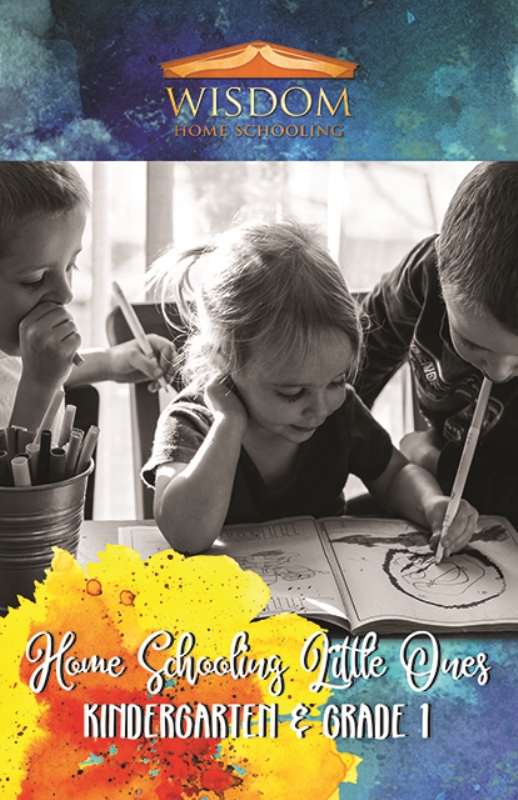 In Alberta, Home Education is officially recognized by Alberta Education when the student is 6 by December 31 of the school year. It is mandatory to enroll your child in a school or home education program if they are 6 as of September 1st. However, if you are reading this, you just might be wanting to get going on home schooling now. And that is a wonderful thing!
Home education is a natural extension of the parenting you are already doing with your young children. Organized play, reading with your child, counting, and identifying objects, arts and crafts - and other things that engage them and cause them to think - all of these are an important part of their early childhood development.
There is no government-recognized home school program for pre-school and kindergarten in Alberta, but don't let that stop you. You can be as organized or as spontaneous as suits your home and your child's unique needs but let the ideas on the pages ahead inspire you.
MARRIAGE & HOME SCHOOLING
 Along with home schooling and loving our children, staying happily married is one of the best things for parents to do. This booklet focuses on encouragement and tips for the married couples among us.
MEDIATED LEARNING
 WISDOM Home Schooling offers parents an effective method of interaction that can help all learners, regardless of learning or behaviour difficulties, age, or background. The parent is the best person to help a child make progress in their learning. The mediational method develops optimism in the child, opens a greater desire to learn, and stimulates enthusiasm to work to a place of success. Find out more here.
NATURE STUDIES
 Enjoy nature with your children. All these articles were written by home school parents or graduates and encourage us to enjoy the outdoors often. One of the best parts about homeschooling is encouraging our children to move!
NOTES TO MYSELF
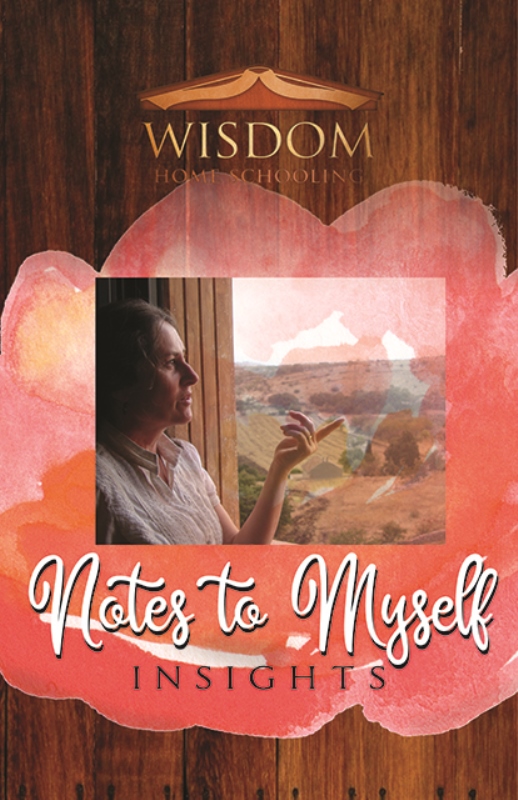 Marlane Noster is WISDOM's co-founder and Events Director. She and Ken began homeschooling in the late '80's and continued to then home educate all 6 of their children through high school. Marlane writes for the WISDOM Family Magazine under her column, "Notes to Myself", allowing you into the inner dialogue of a hard-working home schooling mother. We've chosen some of her best-loved articles for this booklet.
ON BUILDING NOAH'S ARK
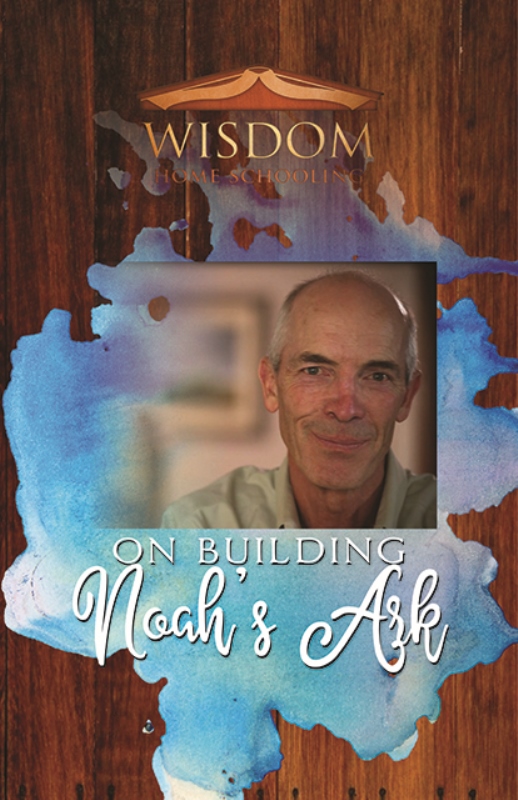 Noah had never built an ark before. Much like Noah, we step forward in this parenting and home schooling journey, working with our whole focus and having faith that all with come to fruition in due time.
Ken Noster, founder and Principal of WISDOM, is a passionate supporter of home education and of parenting our children wisely. He and his wife Marlane home educated their 6 children through high school and now reap the rewards of many great conversations as they reverberate through to the next generation. They continue to assist, educate, and advocate for home schoolers in Alberta and beyond, with a mission to build culture through the support of home educating families everywhere. Ken writes for the bi-monthly WISDOM Family Magazine under his column On Building Noah's Ark. We chose some of our favourite articles for this booklet.
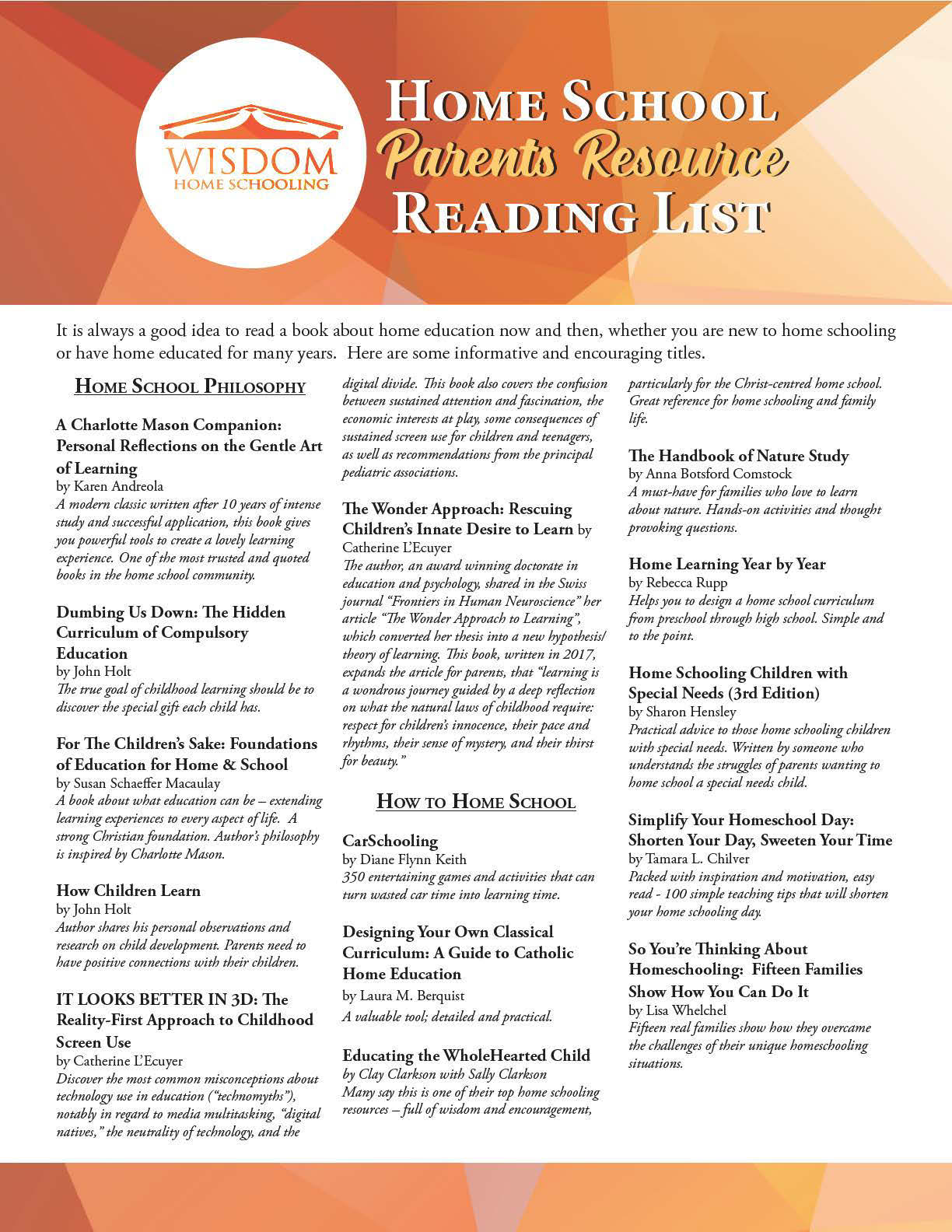
PARENT READING LIST
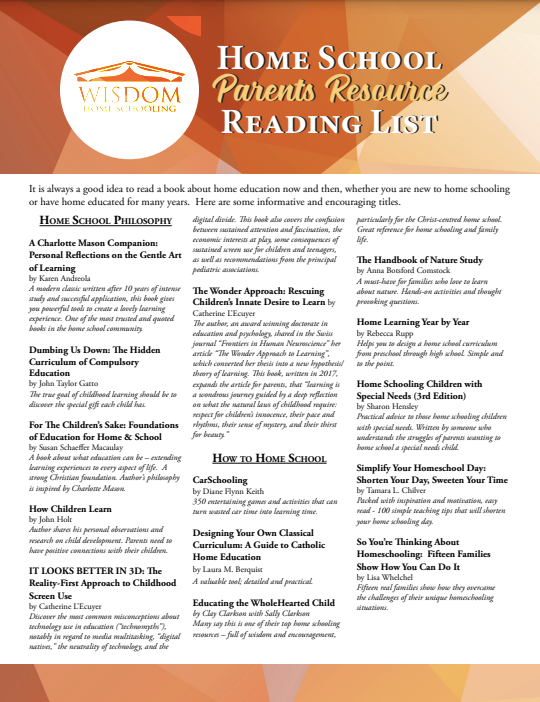 We also have a great parent reading list, where you will find some excellent resources about education and specifically home schooling.
 PLANNING AND PERSEVERANCE (FOR THE HOME SCHOOL PARENT)
The key to effective home education depends a lot on planning. This resource is full of tips to help you plan well for all stages of teaching your children.
RECORD KEEPING FOR THE HOME SCHOOL PARENT
 Staying organized is often one of the biggest challenges in a busy, homeschooling home, and it's even more important than we sometimes realize. This booklet gives you practical tips for effective record keeping, written by home schooling parents who have faced these challenges.
SCIENCE & TECHNOLOGY - VOLUME 1 AND VOLUME 2
Georg & Gayle Beinert have been on WISDOM's Parent Advisory Council for many years, serving with enthusiasm and love. Their passion for home schooling is enhanced by their passion for science and technology, and they were instrumental in bringing Science and Technology events to WISDOM families around Alberta. Georg's articles make up Volume 1 and 2 of the Science & Technology booklets.
SPECIAL NEEDS – Volume 1 and 2
 These booklets have an assortment of articles by a variety of authors with many ideas, tips, and encouragement on home schooling your special needs child.
SPELLBOUND
 This booklet shares information and the facts about the impact of screentime on the brain. It is an important read for all parents. It also includes WISDOM's recommendations regarding Screentime for Children.
STUDENT READING LIST
 This booklet is a hidden gem of great worth among the WISDOM booklets. It has poetry, book suggestions, and MUCH MORE for younger ages, intermediate ages, and upper ages of children. It is a wonderful resource to have on hand and to leaf through each year while planning read alouds or assigned reading for older children.
This is a comprehensive student reading list recommended for grades 4-12. This is only a guideline, as you may find that your grade 2 student, for example, enjoys some of the same books as an average grade 4 student. These books are excellent for reading individually or together as a family.
Please note that this list of books for students was compiled on the recommendation of home schoolers, and that we at WISDOM have not personally read them all. While we believe them to be consistent with a good ethical worldview, if you do find anything in this list to be objectionable, please let us know at your earliest convenience.
TEACHING THE STRUGGLING READER
 Find tips and encouragement for working with children who are struggling to read.
There is even more support for teaching reading through WISDOM's "Reading & Math" Mediated Learning Workshop.
YOUR HOME SCHOOL VISION
What is your vision? What is your Why? What is the essence of your home school? This is a great foundation booklet with articles on why and how to home school - that all depends on your vision for home schooling your children.
To order print copies mailed to you free, please email office@wisdomhomeschooling.com or call the office at 780-741-2113.